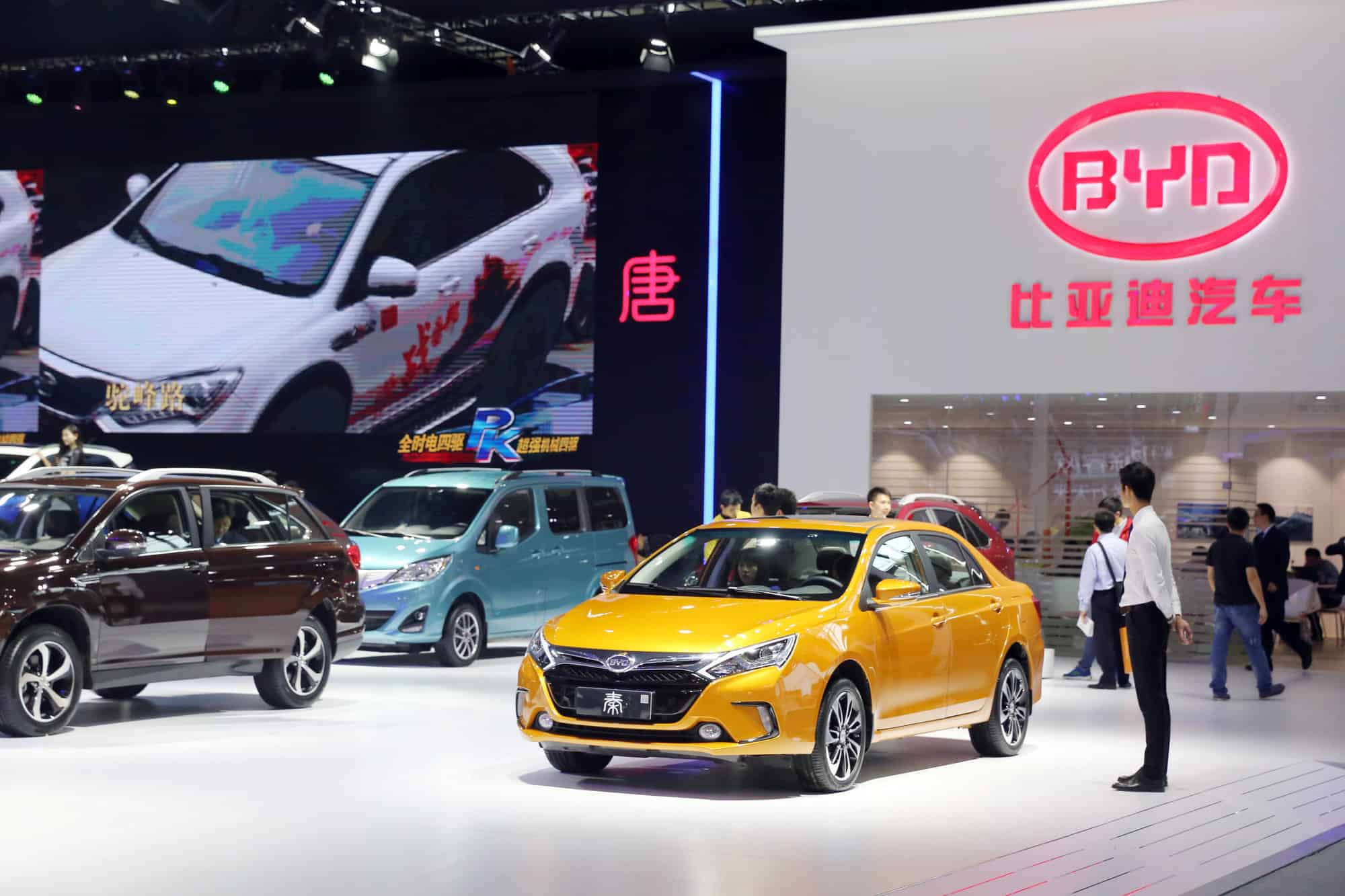
Riding off increased global exports, Chinese giant BYD handily beat out Tesla as the world’s top seller of electric vehicles in 2025, despite a challenging domestic market and decreasing profits.
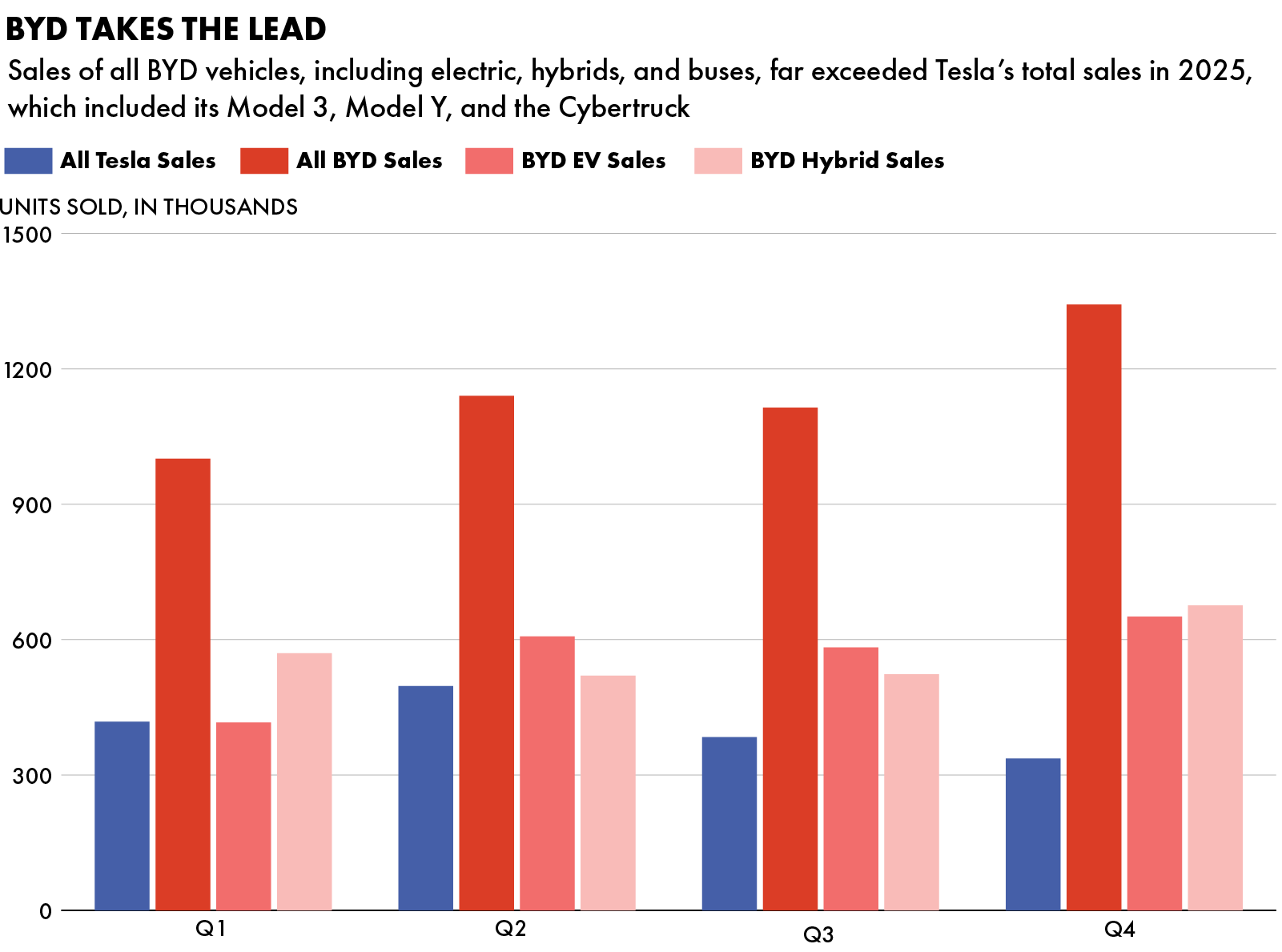
BYD wrapped up the year with 4.6 million total sales across all its vehicle offerings, around half of which were electric vehicles and the rest plug-in hybrids. Tesla only delivered 1.6 million EVs, and doesn’t offer hybrids.
The company’s success is a result of its strategy of producing cars to suit every taste and wallet, says Lei Xing, co-host and producer of the China EVs & More podcast and long-time industry observer.
“[BYD has] a tsunami of different models covering different segments, whereas Tesla is stalling in terms of new product launches,” he says.
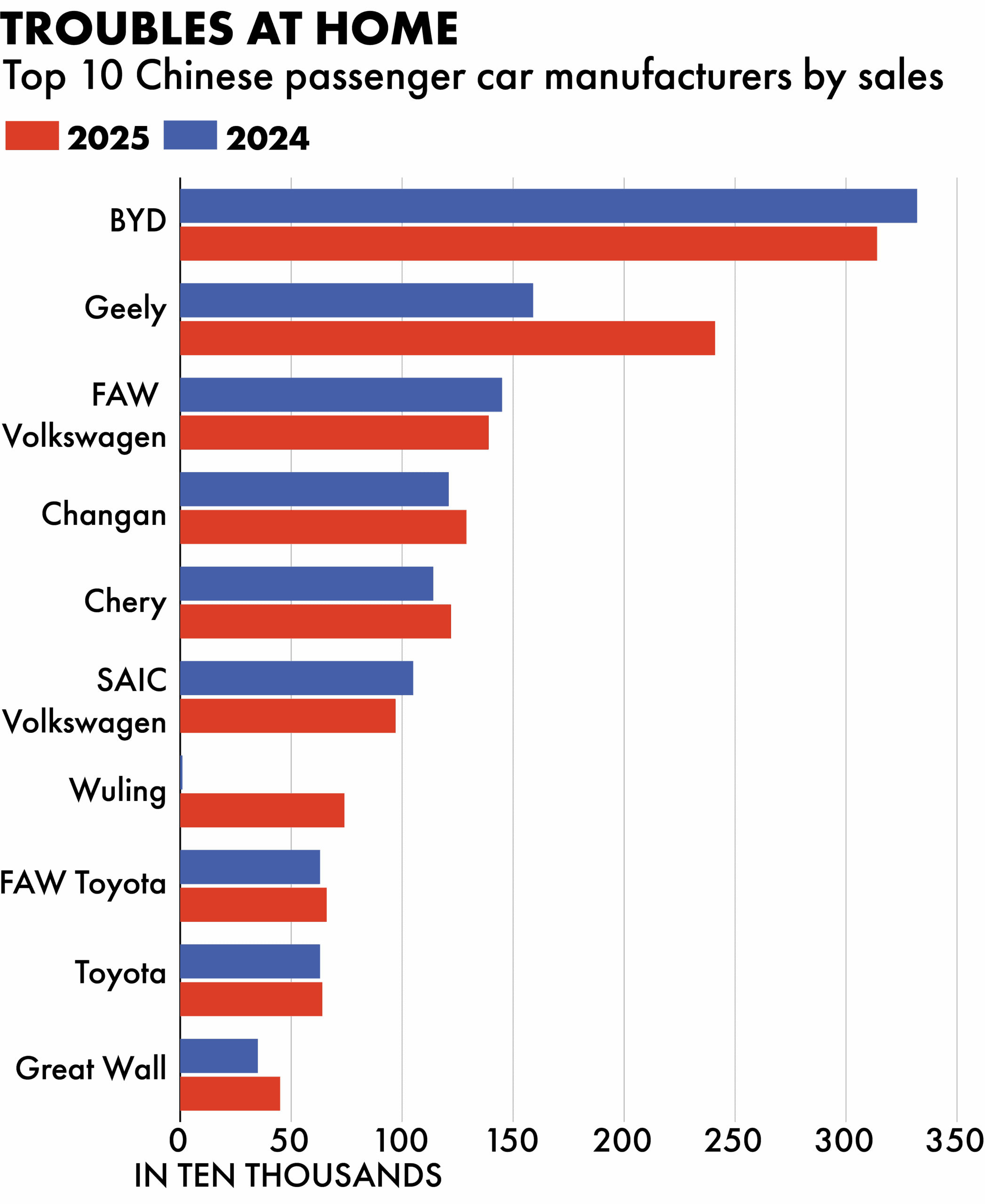
Yet the company faced declining sales in China last year, as consumers held off on large purchases, and competitors such as Geely claimed a larger market share. In its third quarter, BYD saw a 33 percent drop in profit from the previous period after cutting its prices and introducing up to 30 percent discounts in May 2025.
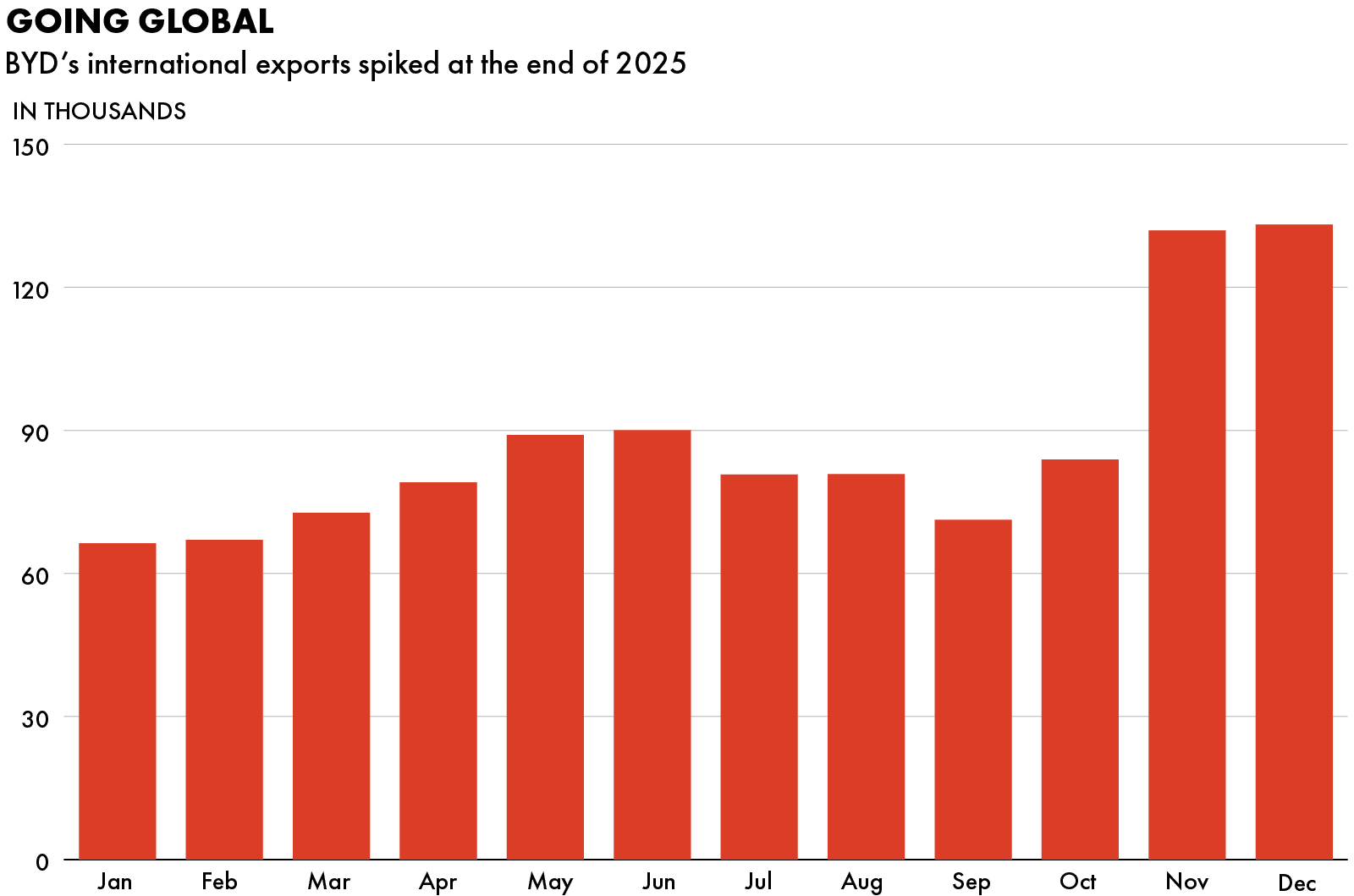
The domestic sales gap was offset by increasing exports and investment overseas as BYD’s localization efforts bear fruit. The company has invested in five sites across Hungary, for example, while its Brazilian plant has been rolling EVs off the line since the summer, driving strong overseas sales at the end of the year.
BYD’S BET
BYD has left a host of competitors behind on its road to the top of China’s ultra-competitive EV market. Of the some 500 EV startups registered in China in 2018, 400 were out of business by 2025, according to European EV agency EVBoosters.
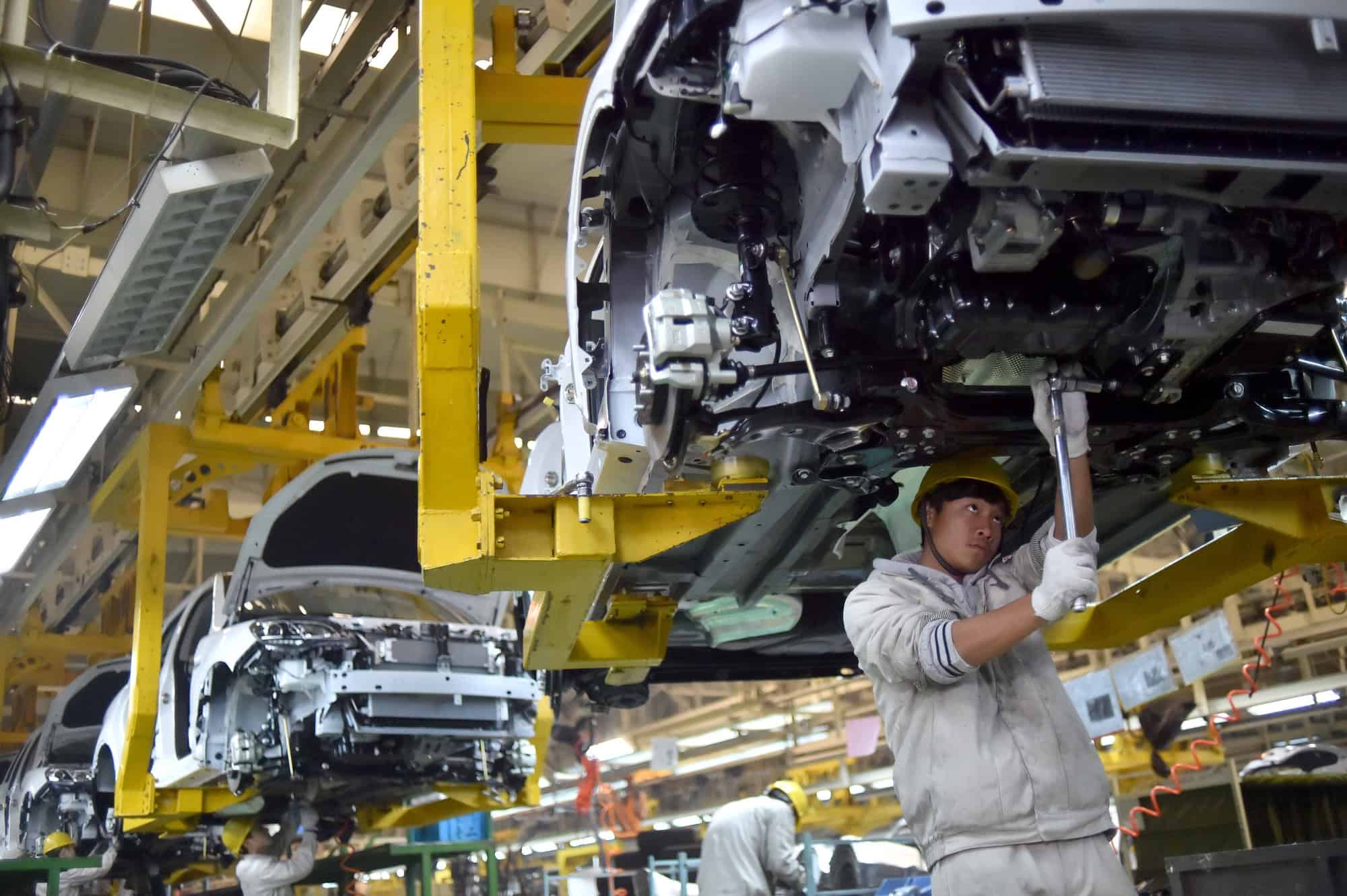
China’s remaining carmakers must also face the reality of market limits: many people who want a new EV have already purchased one. To help spur sales, Beijing has been encouraging customers to trade in their cars: under a government-led national program, customers who scrap or replace eligible cars with new ones will receive a subsidy. According to government announcements, more than half of China’s passenger vehicle retail sales in 2025 involved trade-ins.
To stay ahead, BYD and its competitors have transformed the EV industry by slashing the amount of time it takes to produce new vehicles. A recent McKinsey study found that China’s EV firms can now take a new vehicle from concept to launch in just 24 months. BYD alone poured some $6.3 billion into R&D from January to September 2025, up by a third from the same period last year.
Manufacturers were seeing EVs as a luxury good, offering them at a high price point. Where Chinese automakers have completely disrupted the market, and now you see other manufacturers looking to follow suit, is in offering smaller vehicles at a much lower price point.
Euan Graham, an analyst at Ember Energy
It’s paid off: BYD now has one of the most vertically integrated EV supply chains and is a model for other Chinese firms such as XPeng, Nio, and Li Auto, says Xing.
“This is all much more prevalent in the Chinese competitive landscape because these Chinese companies want to move fast and control their own speed and destiny without relying on outside third parties,” he says.
BIG FISH IN A BIGGER POND
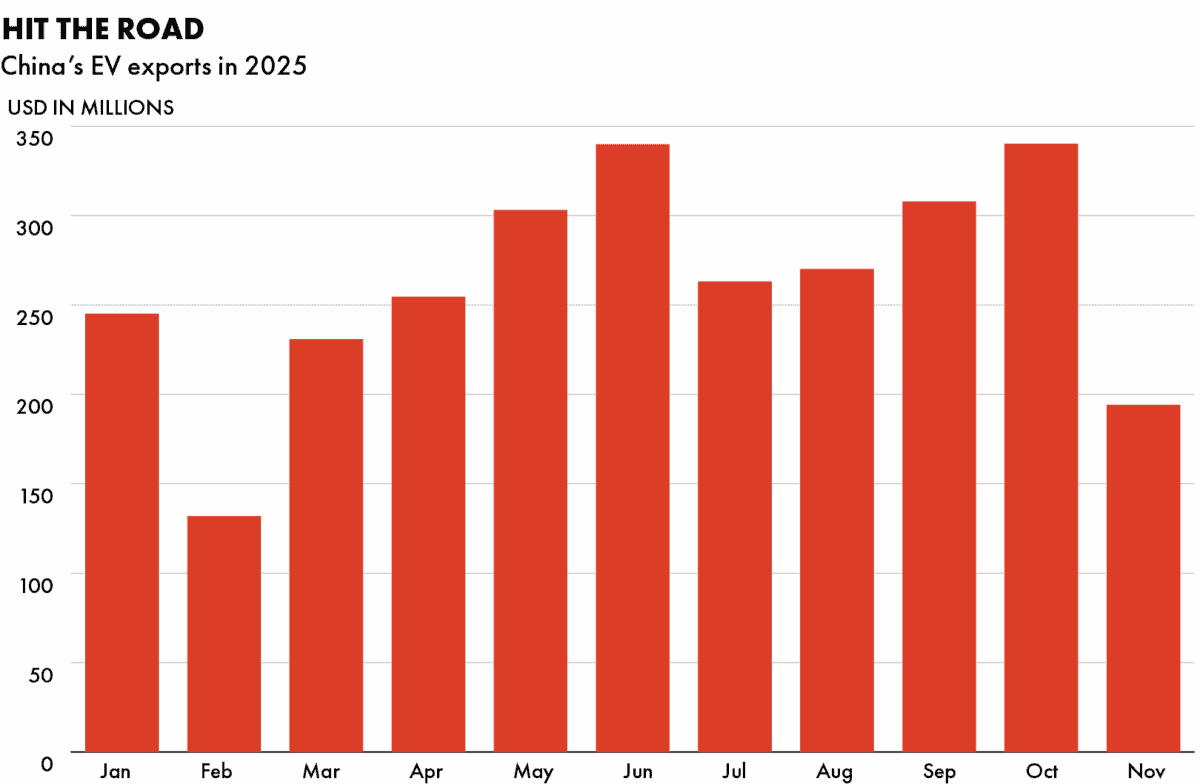
BYD and its rivals’ ability to produce vast numbers of cars, allied to weak domestic demand, has left them with little choice but to seek growth overseas. China’s electric and hybrid vehicle exports up to November 2025 amounted to nearly $3 billion, according to Chinese customs data.
BYD saw some gains in advanced economies, but its true growth story is in emerging economies across Asia and Latin America.

“Manufacturers were seeing EVs as a luxury good, offering them at a high price point,” says Euan Graham, an analyst at Ember Energy. “Where Chinese automakers have completely disrupted the market, and now you see other manufacturers looking to follow suit, is in offering smaller vehicles at a much lower price point.”
Emerging economies are looking to EVs to help grow their domestic economies and cut costs for consumers. Indonesia, for example, has offered tax credits and other benefits to entice EV companies since 2017, while countries such as Nepal and Ethiopia are looking to save on fuel imports by going electric and relying on domestic hydropower, says Graham.
“Because [EVs] are increasingly viewed as a strategic priority for these markets, I would expect [their] share to keep on rising,” he says.
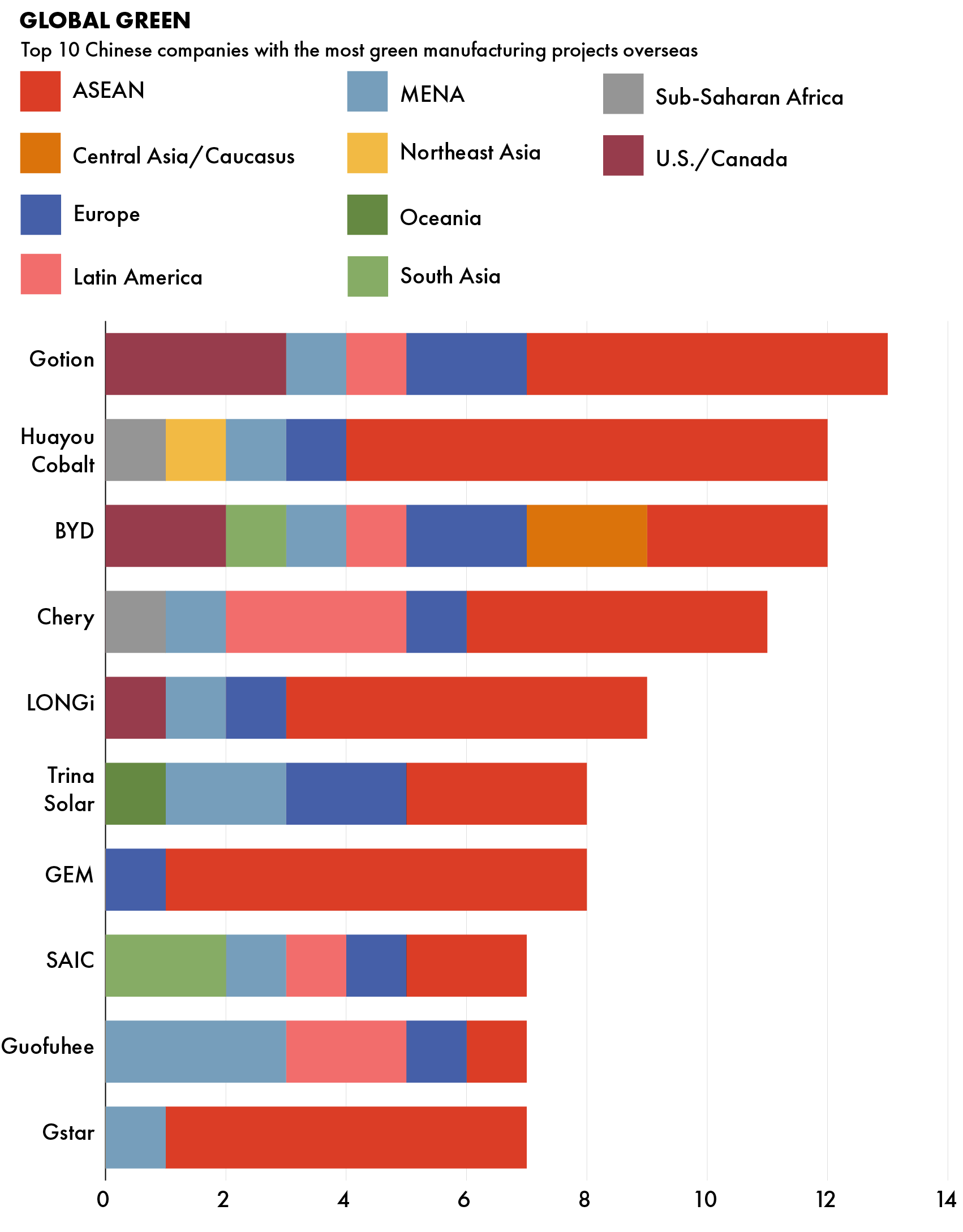
A Net Zero Industrial Policy Lab report shows that new energy vehicles (NEVs) comprise 11.7 percent of China’s total overall green manufacturing investment overseas.
BYD alone has 12 projects ongoing, and has pledged $8.7 billion towards green manufacturing projects outside of China. One of them, BYD’s Brazilian factory built on a former Ford site, is expected to reach capacity to produce 600,000 vehicles a year in the second half of 2026.
Still, BYD is now facing challenges abroad as well as at home, as it goes up against both Chinese startups looking to imitate its model and local brands. Vietnam’s EV market, for example, is already led by domestic carmaker Vinfast. And despite making rapid sales gains in Germany, BYD holds less than a 1 percent market share there.
“It’s not all smooth sailing,” says Xing. He notes European automakers like Renault are introducing small, cheap EV options that directly compete in BYD’s niche. “If you’re at the top, you’re in the most danger of falling down.”

Savannah Billman is a Staff Writer for The Wire China based in NYC. She previously worked at the National Committee on U.S.-China Relations.