China's main aim is to blame the U.S. and Israel for turmoil in the Middle East.
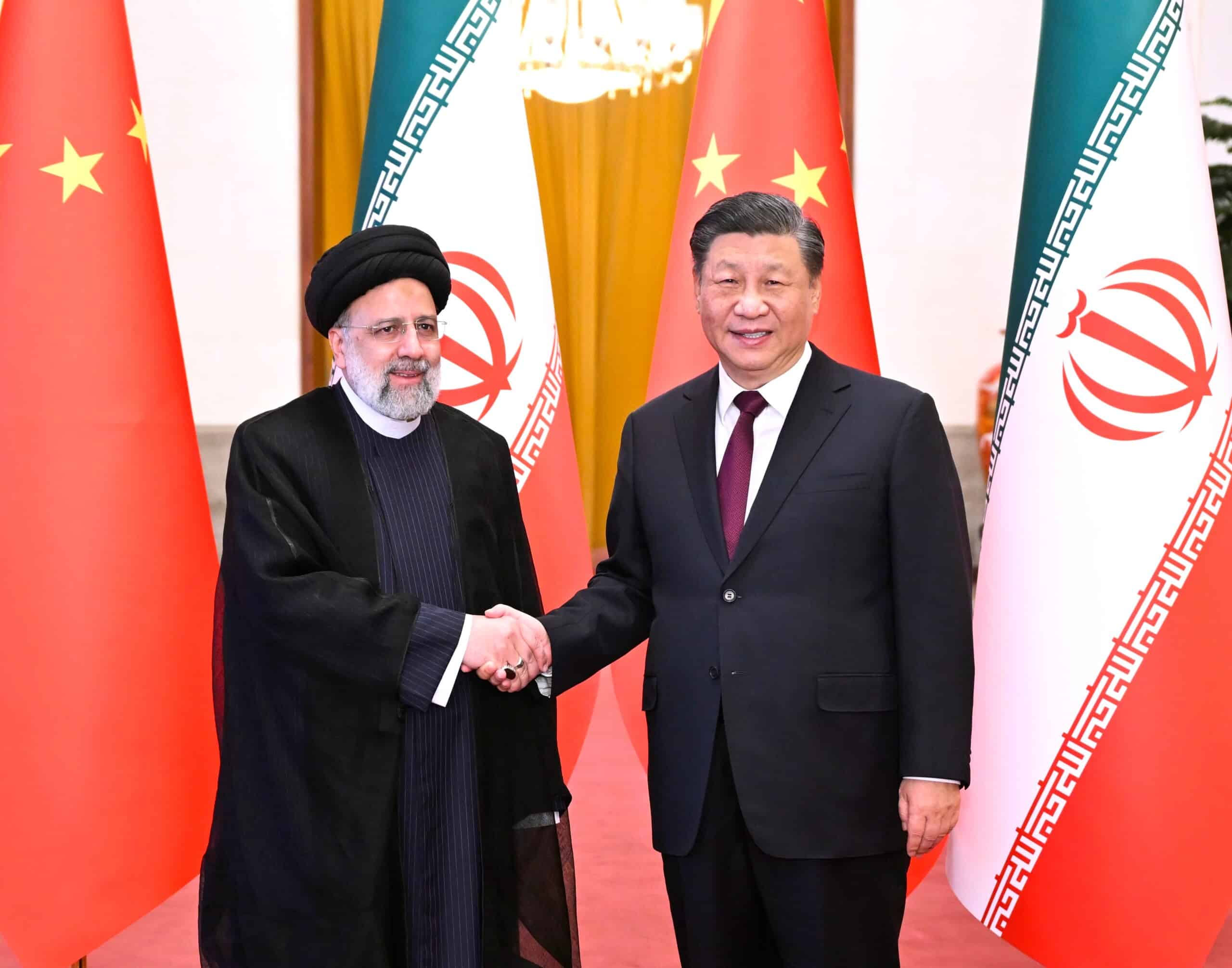
Chinese President Xi Jinping holds a welcoming ceremony for visiting President of the Islamic Republic of Iran, Ebrahim Raisi, prior to their talks at the Great Hall of the People in Beijing, February 14, 2023. Credit: Yan Yan/Xinhua via Getty Images
Chinese policy in the Middle East is shaped by two factors: China’s threat perceptions and its strategic calculus regarding its great-power competition with the United States. And when it comes to dealing with the U.S., China’s approach comes down to three “nos”: no cooperation, no support, and no confrontation. This credo underlies China’s decision not to push back against the Iran-backed Houthis as they carry out drone and missile attacks on Red Sea shipping lanes.
The Marlin Luan
Exclusive longform investigative journalism, Q&As, news and analysis, and data on Chinese business elites and corporations. We publish China scoops you won't find anywhere else.
A weekly curated reading list on China from Andrew Peaple.
A daily roundup of China finance, business and economics headlines.
We offer discounts for groups, institutions and students. Go to our Subscriptions page for details.
How did the late premier convince local governments to surrender fiscal revenues to Beijing? In an extract from his recent book, Authoritarian Markets, Adam Y. Liu explains how Zhu played his trump card — letting local governments set up their own banks.
We use cookies to ensure that we give you the best experience on our website. If you continue to use this site we will assume that you are happy with it.