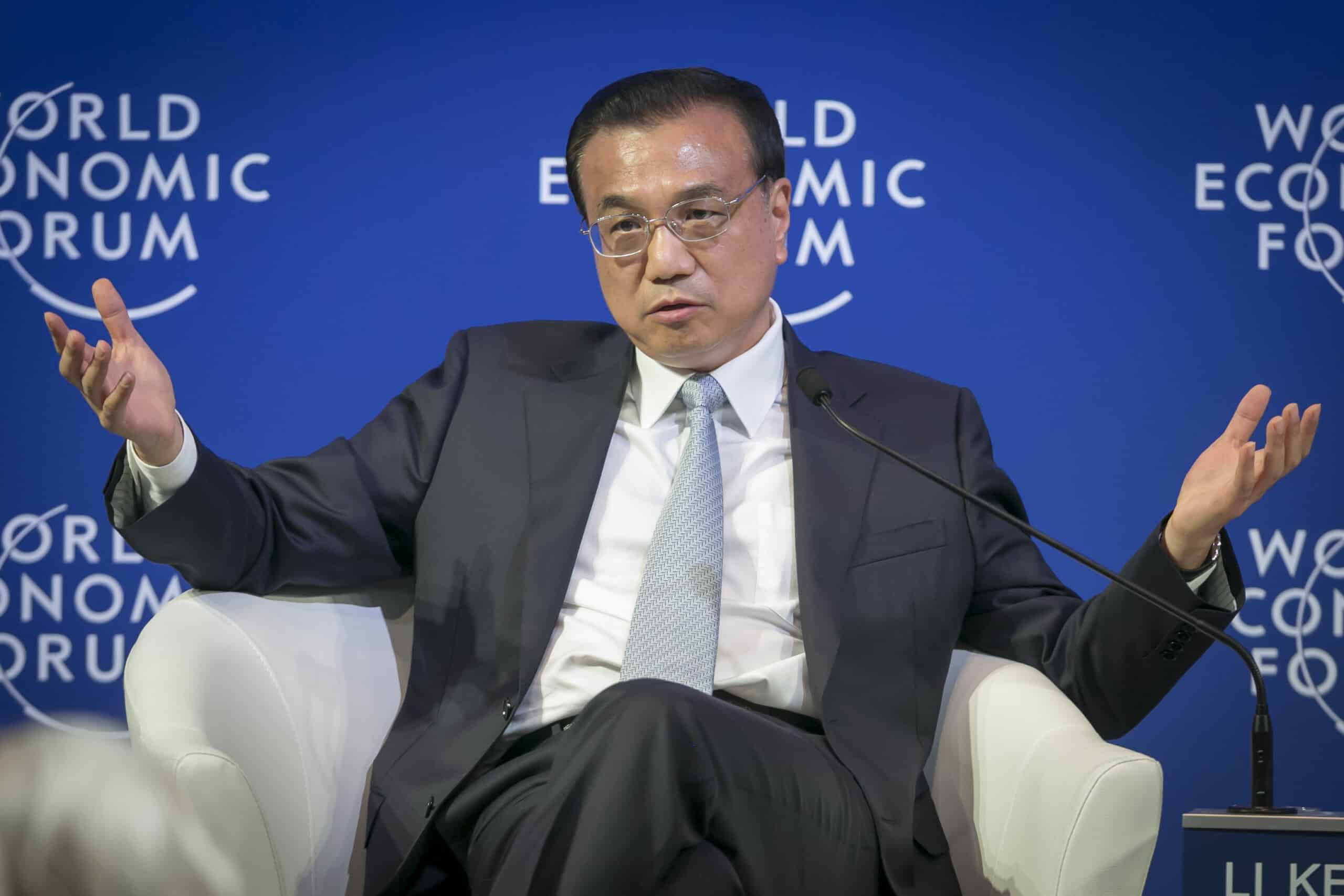
Li Keqiang, China’s former premier who unexpectedly passed away this week at the age of 68, first entered elite politics at the young age of 28 in late 1983, when he was elected as an alternate secretary of the Communist Youth League. Engaging in national politics in an era of institutionalization, Li benefited from new rules introduced to foster regulated leadership turnovers to rise up the Chinese Communist Party ranks. To the last, he played by those rules that had made his career.
But this reliance on rules to get ahead did not prepare him for the naked power struggle that always lies beneath the surface in the Party. Having risen to the number two position in the Chinese government he ended up retiring before the normal retirement age, having largely been sidelined by Xi Jinping. His passing spells an end to the party’s experiment with the regulation of politics.
…it is not enough to simply follow the rules. Tactics such as unfounded accusations, purges, and blackmail have always been key to power struggles within the Party.
Chinese leaders at the time of Li’s first rise to prominence were Long Marchers who had survived the ordeals of the Cultural Revolution. They knew that they were getting on in age and needed to put successors in place. They didn’t want nakedly ambitious officials with high expectations of power to take over.
Instead, officials like Li Keqiang and Hu Jintao, China’s former leader, were chosen by a group of reform-minded Party insiders who preferred hard-working, humble young officials who were more likely to follow both Party rules, and the instructions of the aging veterans themselves.
Reformers like Hu Yaobang, Li Rui, and even Deng Xiaoping himself believed that by making the CCP more rule-bound, and personnel turnovers more regular, the regime would avoid extreme situations like the Cultural Revolution recurring. This avoidance of extremes would in turn prolong the party’s rule over China, they believed.
The first cohort of young technocrats selected in this milieu, including Jiang Zemin, Li Peng, and Hu Qili, mostly turned out as expected by the elders. They listened to instructions meticulously and, during the Tiananmen Crisis in 1989, generally toed the party line. They grumbled about having to retire and pushed the boundaries, but largely adhered to retirement norms.
A slightly younger technocratic cohort, including Li Keqiang, Li Yuanchao, and Wang Yang, was even more rule conscious, having been trained either in the law or party regulations. These cadres with Communist Youth League experience did try to expand their influence in the party, but mainly within the confines of its norms and institutions.
Given the new retirement norms at the top, Hu Jintao and Lu Keqiang reasoned that if officials in the Youth League network could create a strong pipeline of young officials in the provinces, cadres like them within that network would automatically rise to senior positions. The plan worked quite well through the 17th and even the 18th Party Congresses in 2007 and 2012. Former Youth League officials like Li Keqiang himself, as well as Li Yuanchao, Liu Yandong, Liu Qibao, and Wang Yang, indeed entered the Politburo by 2012. By maximizing their advantages inside formal institutions, the Youth League faction was on the cusp of triumph.
Yet it is not enough to simply follow the rules. Tactics such as unfounded accusations, purges, and blackmail have always been key to power struggles within the Party. Politicians like Xi Jinping grew up in an environment steeped in intrigue and backstabbing, giving them a better understanding of the wide repertoire of skills needed for power struggles. In contrast, the young technocrats of the 1980s wished that the Party had left behind this darker side. They did their best to resist this tendency, mainly by refraining from using such tactics and by pushing for more inclusive decision making. Given their numerical advantage prior to 2012, inclusiveness ensured a greater say for the Youth League faction. Of course, this push for more inclusive policy making was interpreted as evidence of a liberal tendency. In reality, it stemmed from their unwillingness to break established norms and rules.
Yet, this institutional approach left the Youth League faction members vulnerable to politicians who were willing to break the rules and pursue coercive tactics to seize power. Given the lack of a strong Chinese constitution and the fact that branches of the government are not autonomous of the ruling party, the institutionalists had no recourse when politicians mobilized allies in the military and the security agencies against them.
In his last days in power, Li Keqiang likely saw the effect of unchecked power in how decisions were made and seemed to speak out against it…
In non-democracies, naked power struggles are advantageous to the winners because they can use more tools to undermine competitors. They also have less need to share power upon victory. Yet, the political system and even the country pay a heavy price for the dominance of strongman politics. For those within the party, any policy initiative that triggers the suspicions of the top leadership can end one’s career or worse, which leaves the vast majority of officials in a constant state of stress. Because of this, their best response is to follow the leader’s dictates to the letter and to take no initiatives, which leaves many of the country’s issues festering.
In his last days in power, Li Keqiang likely saw the effect of unchecked power in how decisions were made and seemed to speak out against it. “The Yangtze and Yellow River will not flow backwards,” he proclaimed in late 2022. Yet, the harsh reality is that when absolute power is exercised in a system with many levers of control, the laws of physics can be suspended.

Victor Shih is an associate professor of political economy at UC San Diego and holds the Ho Miu Lam Chair in China and Pacific Relations at the School of Global Policy and Strategy. He is also the director of the 21st Century China Center and the author of Factions and Finance in China: Elite Conflict and Inflation. @vshih2