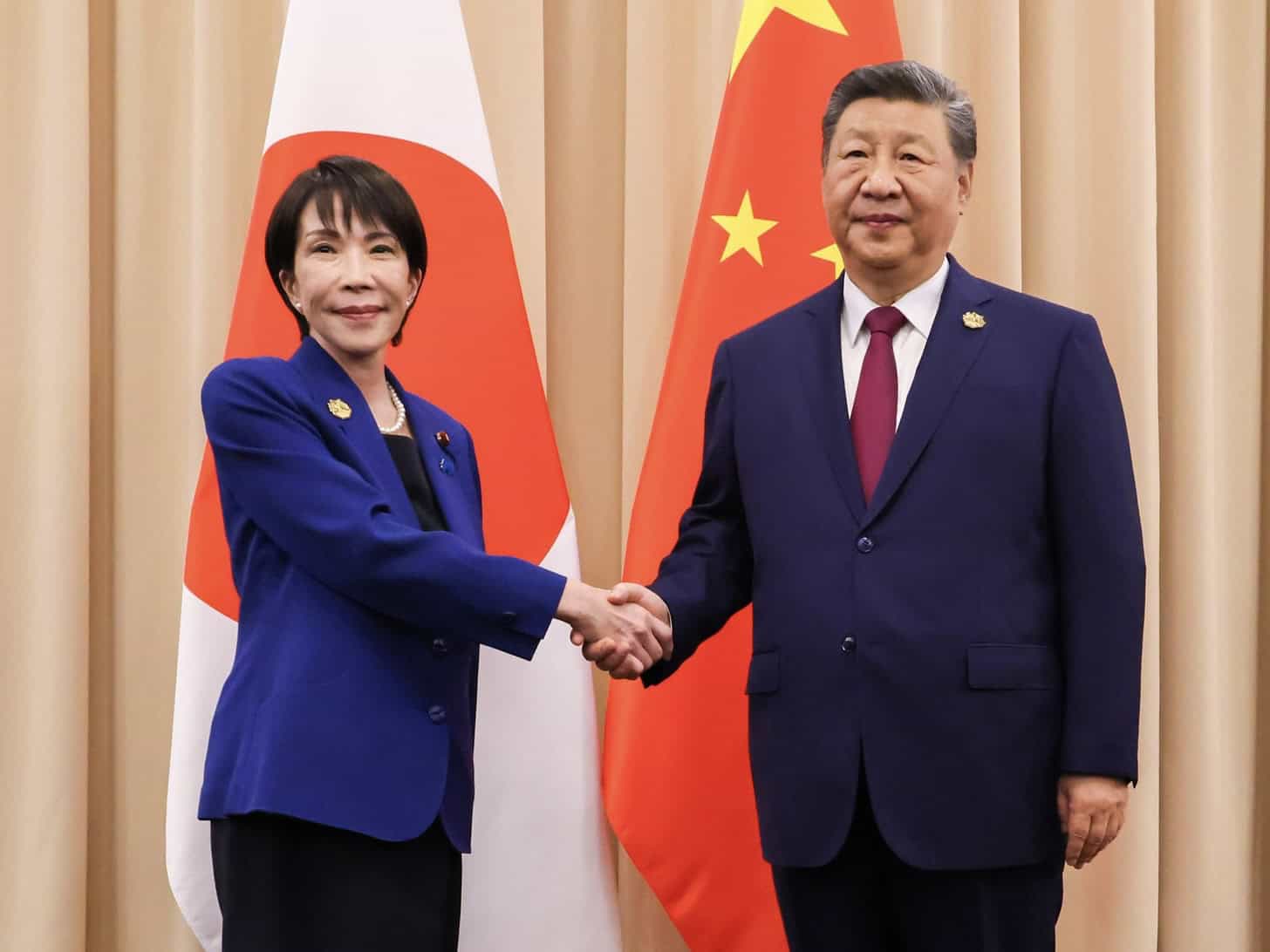
Ten days after taking office last month, Japanese Prime Minister Sanae Takaichi shook hands with Xi Jinping, China’s leader. Less than three weeks later, relations between China and Japan have spiralled downwards into a crisis that could threaten the significant economic ties between the two Asian powerhouses.
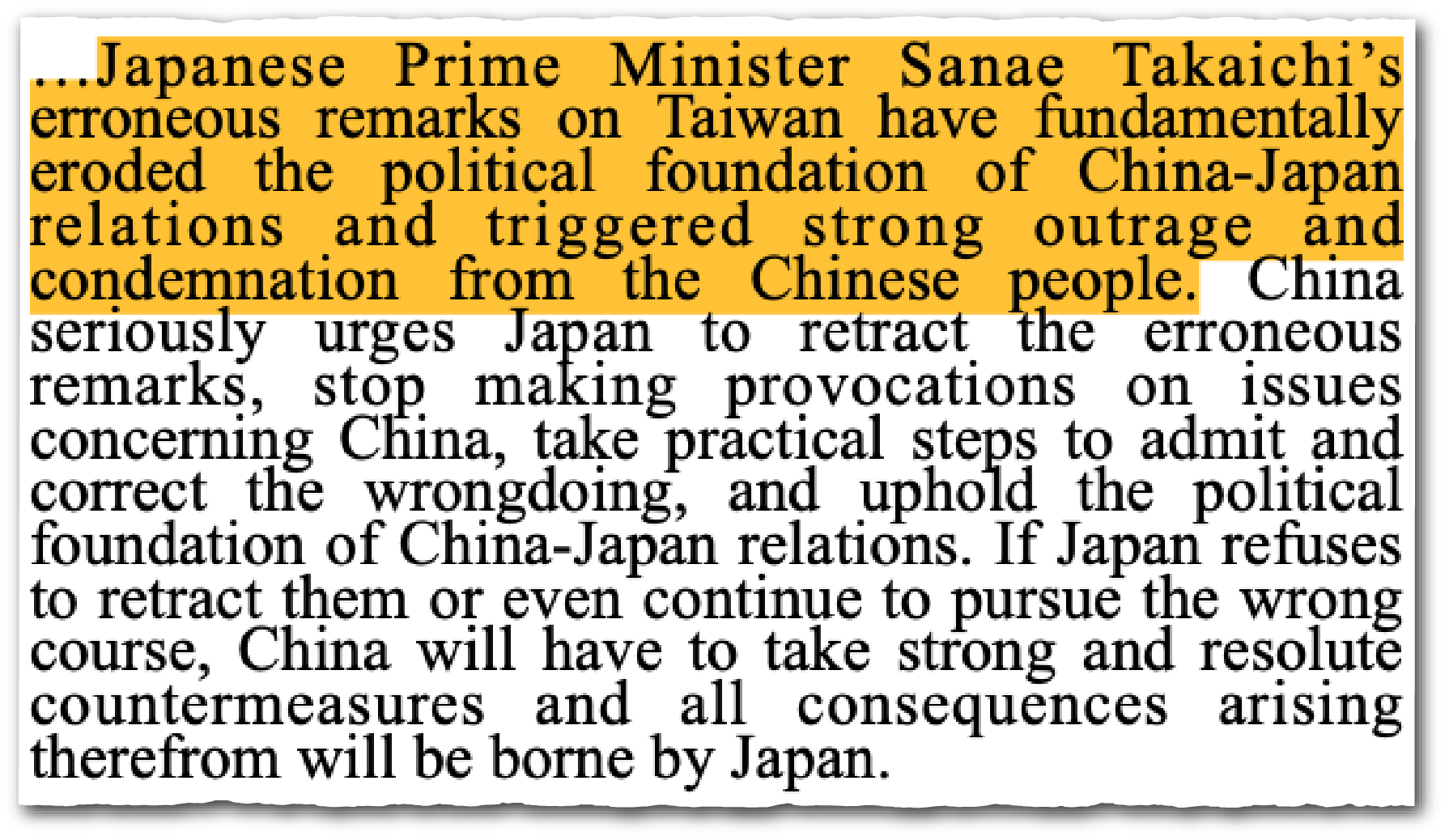
Tensions erupted after Takaichi suggested earlier this month that Japan could mobilize its military if China ever seeks to invade Taiwan. The remark, made to Japan’s parliament, has drawn condemnation from Chinese diplomats and state media. Xue Jian, the Chinese consul general in Osaka, threatened to behead Japan’s leader in a now-deleted social media post.
Chinese officials have since pushed Takaichi to withdraw her statement while expanding patrols around the disputed islands between the two countries — known as the Senkaku in Japan and the Diaoyu in China — and rejecting Japanese overtures for a meeting at the G20 summit this week. Last weekend, China’s Ministry of Tourism and Culture warned its citizens against traveling to Japan, and Chinese airlines offered to refund flights to Japan. This week, Beijing moved to halt imports of Japanese seafood and postpone releases of Japanese movies in China.
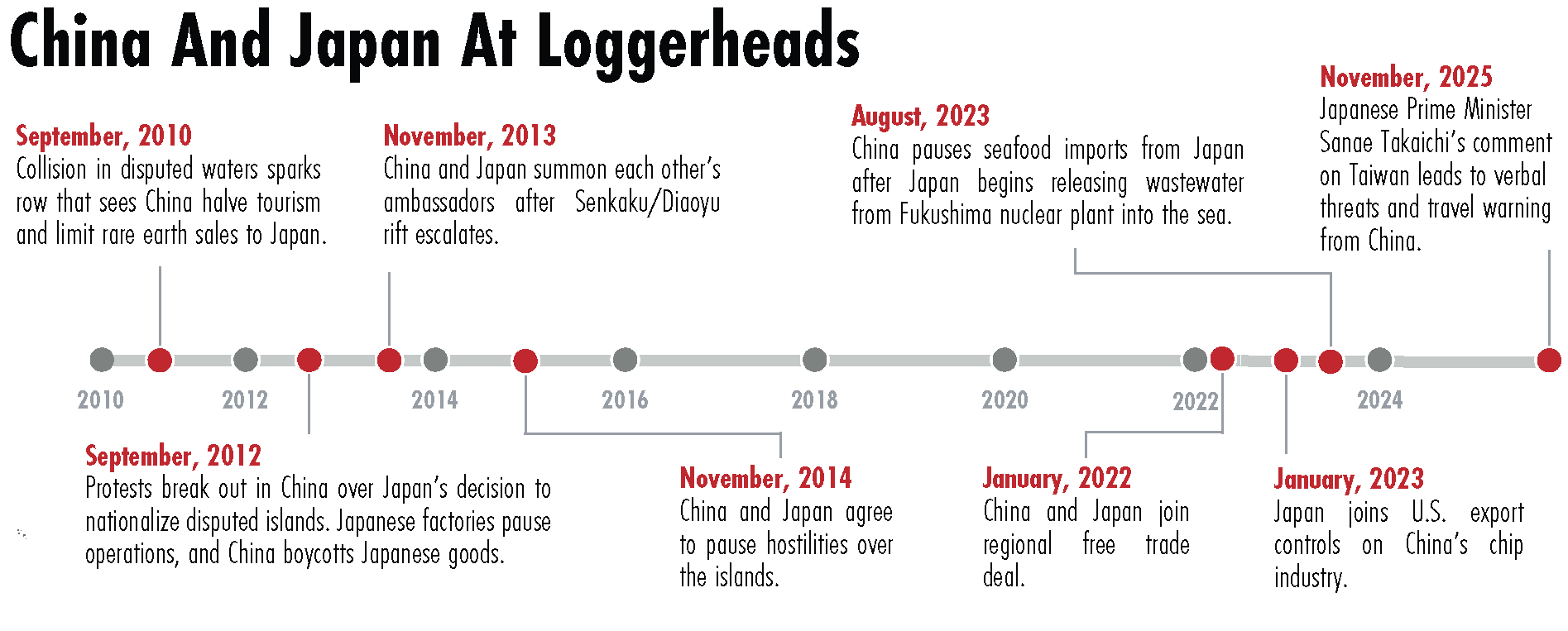
This is not the first time diplomatic tensions have threatened relations between the two of the world’s largest economies.
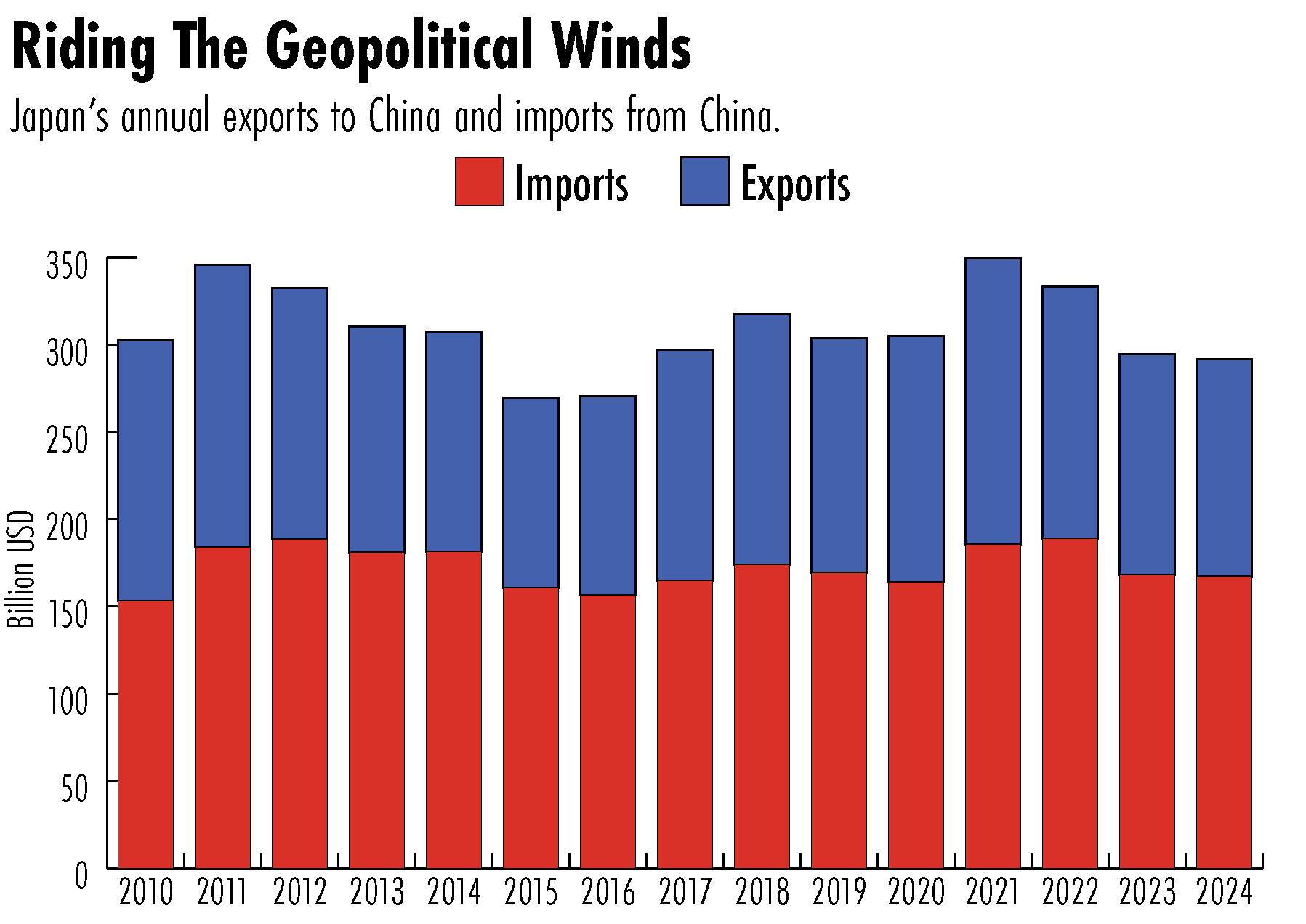
Despite such problems, Japan and China’s mutual economic ties have remained strong. Total trade between the two reached $293 billion last year, and China is now Japan’s largest trading partner, having moved ahead of the United States in 2007, according to a World Bank database.
So far China has not threatened Japanese companies with operations in mainland China, as it did in 2012. Research firm IHS Automotive estimated that automakers Honda, Nissan, Mazda and Toyota combined lost production of nearly 15,000 vehicles that year — implying losses of more than $250 million — after protests related to Japan’s nationalization of the Senkaku/Diaoyu islands forced the companies to pause operations in China.
Investors are already pricing in the risk of retaliation against Japanese firms, though some companies, such as semiconductor equipment giant Tokyo Electron, have not been affected.
CAUGHT IN THE CROSSFIRE
Companies across the Japanese economy are seeing share price declines.
| Company | Industry | China Share of Overall Revenue | Market Cap | Change in Stock Price Since Nov. 20 |
|---|---|---|---|---|
 Shiseido
|
Cosmetics | 25% | $5.5 billion | -18.98% |
 Nidec
Nidec
|
Electronics | 21.1% | $15 billion | -10.55% |
 Fast Retailing
|
Fast fashion | 21.80% | $106 billion | -4.86% |
 Fanuc
Fanuc
|
Robotics | 21.60% | $30.5 billion | -4.79% |
 Tokyo Electron
|
Semiconductors | 42% | $97 billion | +1.56% |
Note: Revenue is from each company’s most recent annual report. Fast Retailing includes figures from Greater China. Shows stock traded on Tokyo exchange. Source: The companies; Google Finance
Japanese companies are well attuned to the risks of doing business in China, says Shihoko Goto, director of the Asia Program at the Washington-based Foreign Policy Research Institute. “But the opportunities are tremendous,” she says. “Japan is never going to decouple from China.”
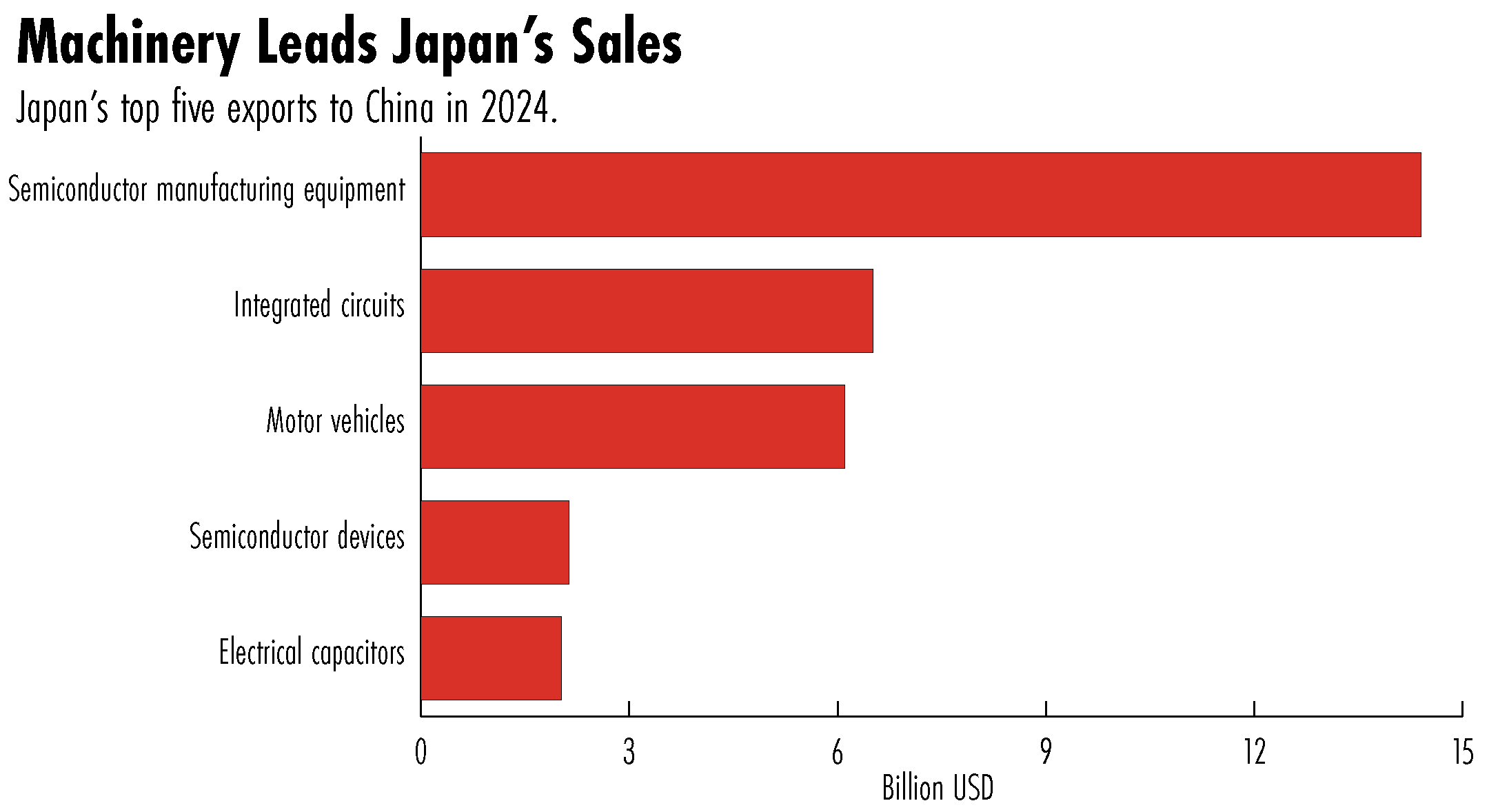
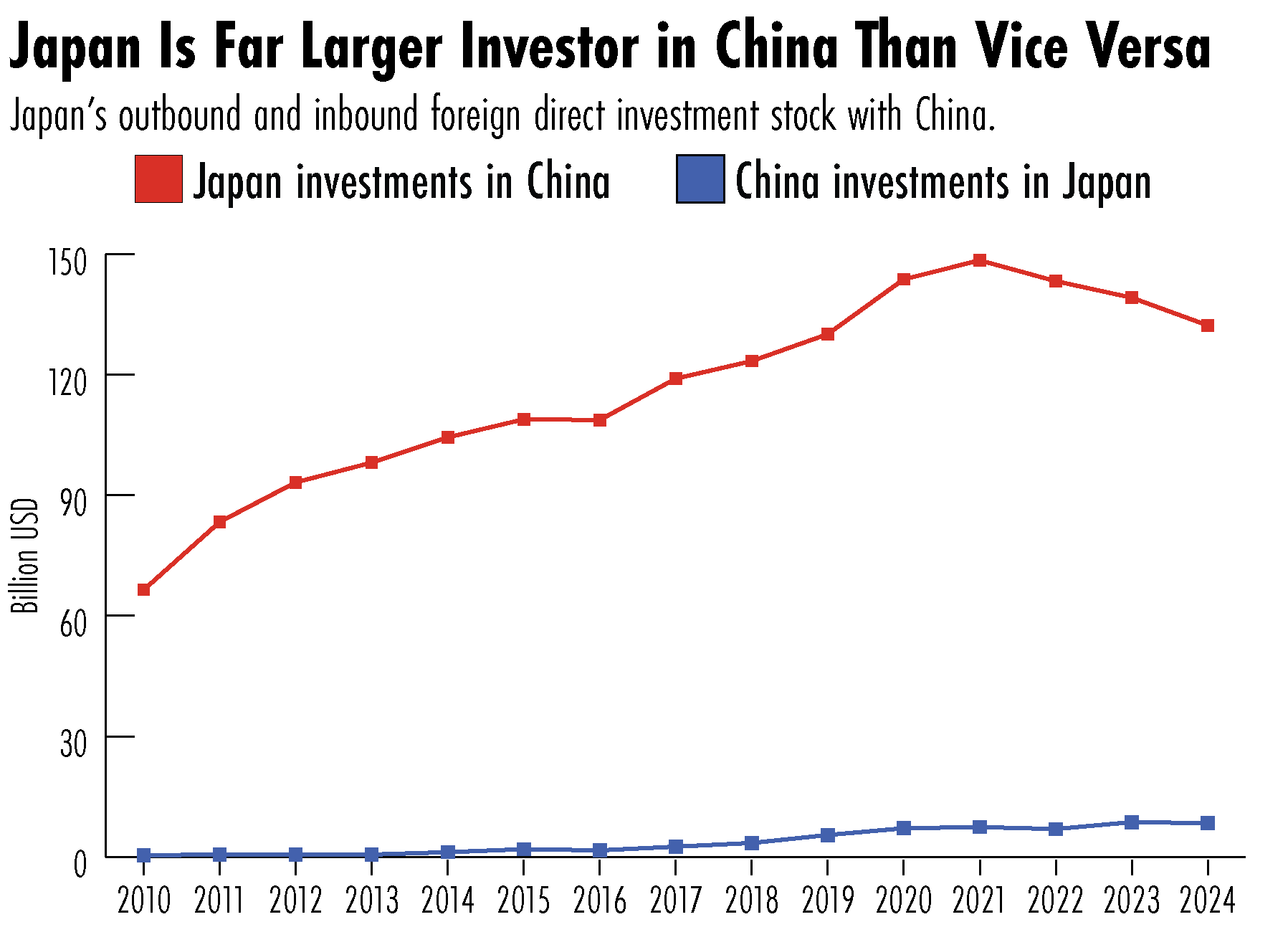
Indeed, Japan has long been one of the largest foreign sources of capital in China. As of last year it had more than $132 billion invested in the Chinese market, according to Japanese government statistics. China, by contrast, had slightly more than $8 billion invested in Japan, the data show.
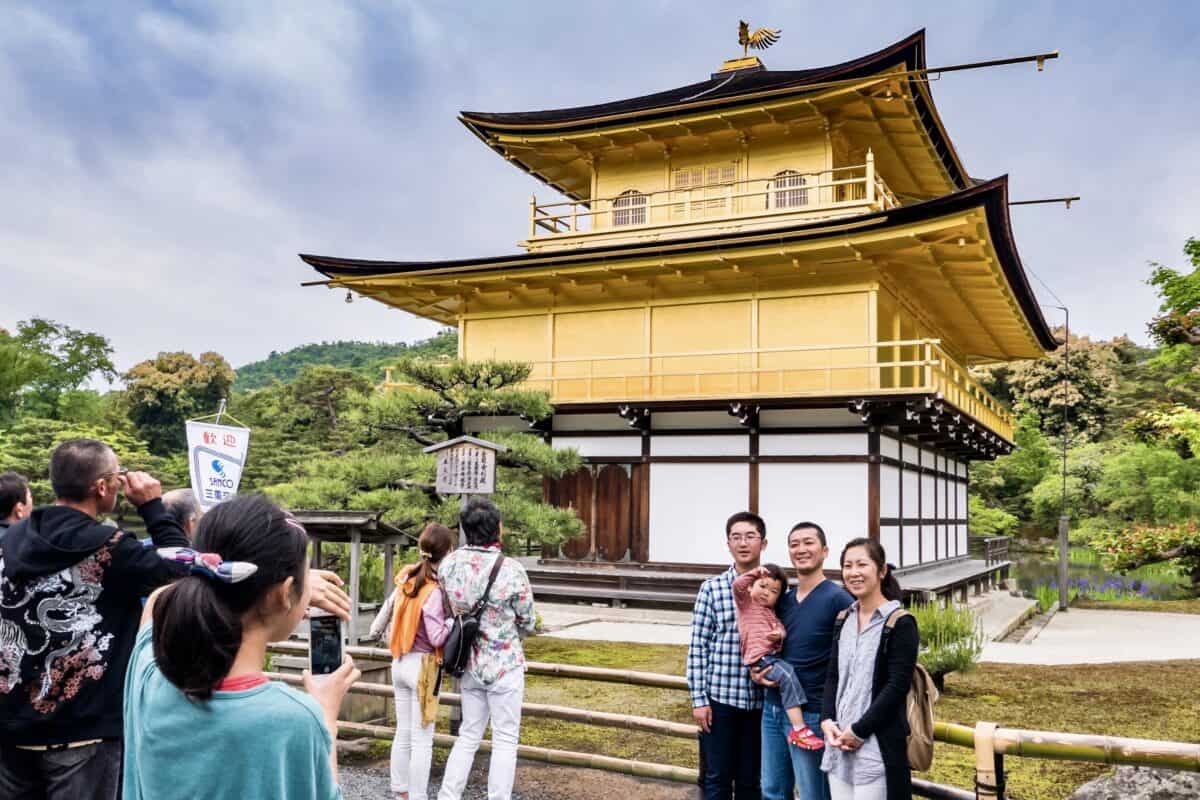

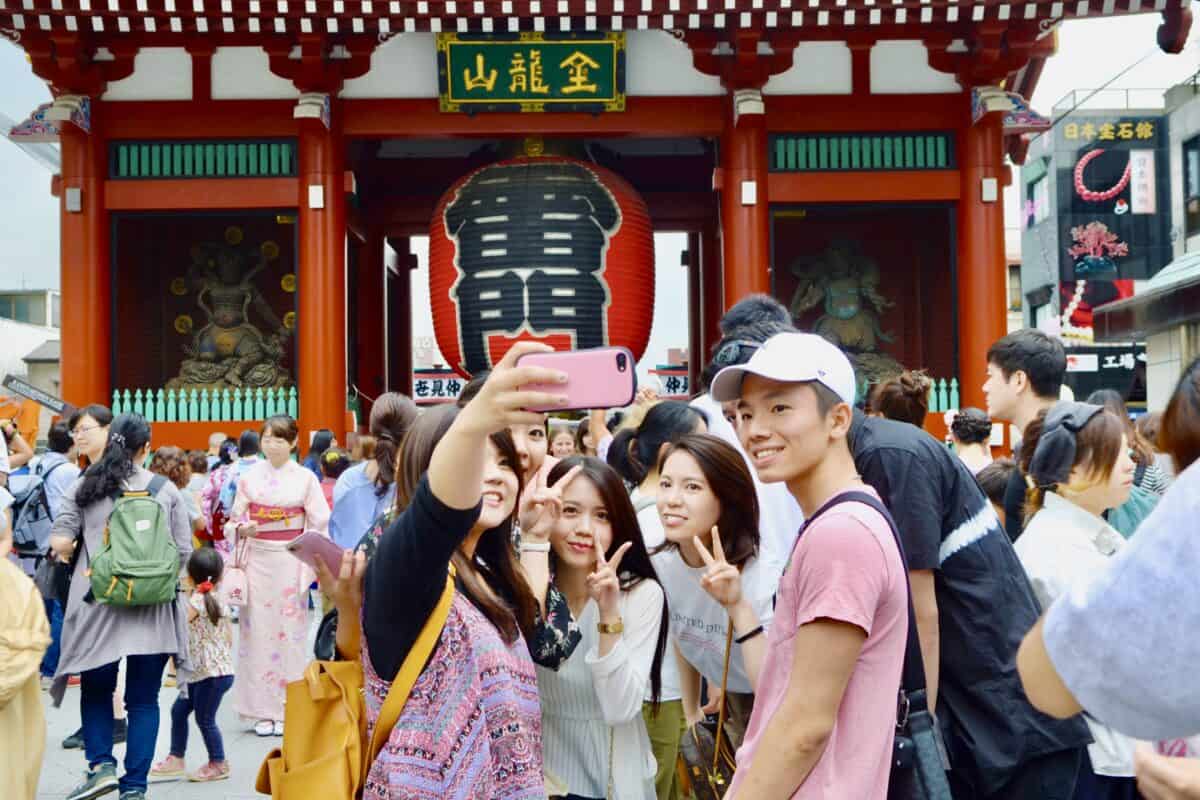
From left to right: Kyoto’s Golden Pavillion, Tokyo Disneyland, and Asakusa’s Sensō-ji Temple. Credit: Depositphotos
Tourism has also become vital to the Sino-Japanese economic relationship, particularly for Japan. Chinese tourists first started traveling to Japan in droves after relations stabilized in 2014. Spending by foreign visitors to Japan drove more than half of the country’s 1.5 percent GDP growth in 2023, according to an analysis by the Mastercard Research Institute.
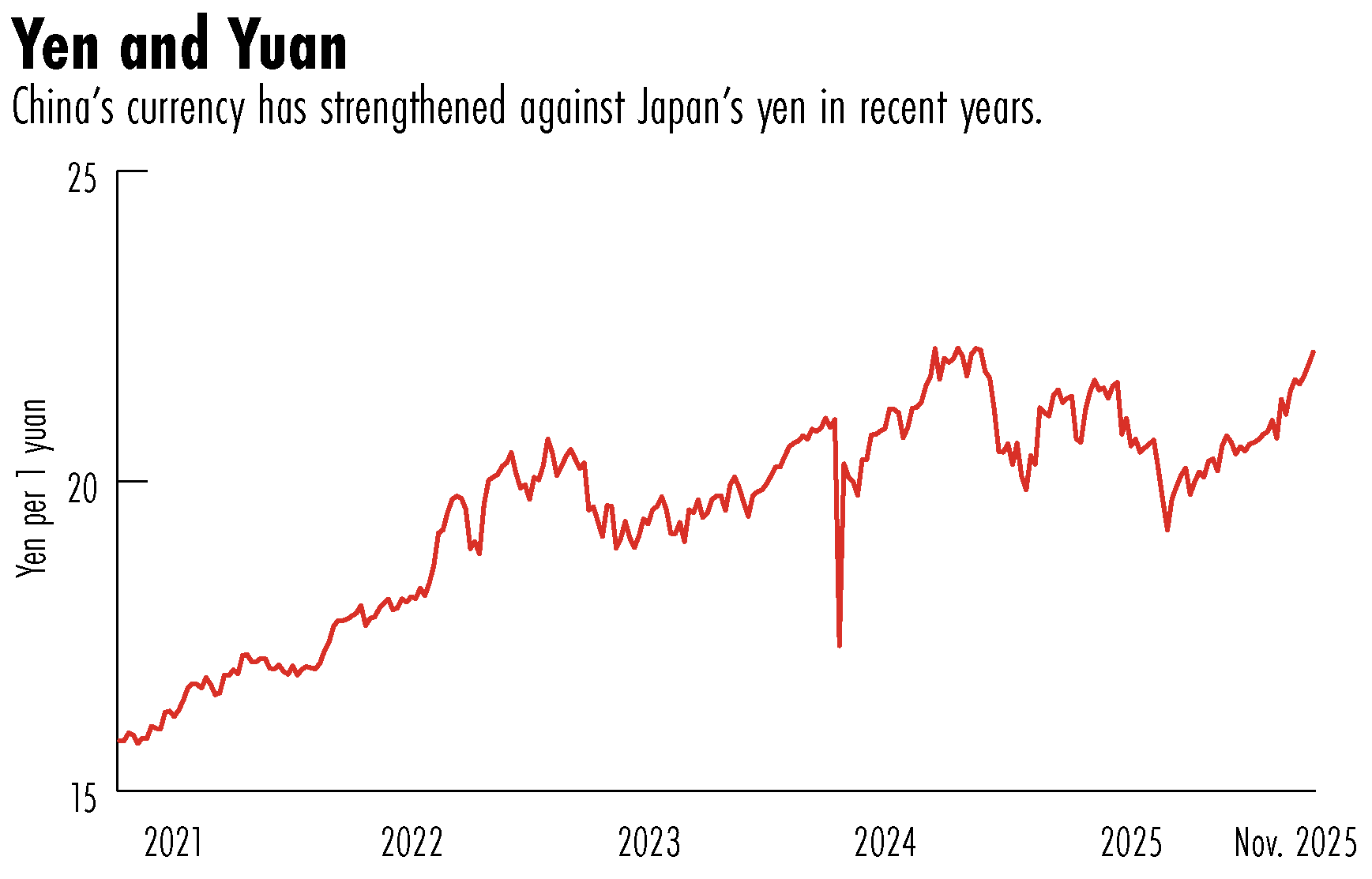
The surge in tourism has in part been driven by the Chinese yuan’s relative strength against the Japanese yen, a trend that has been in place over the last five years due to factors such as Japan’s high debt and low interest rates, as well as China’s intervention in foreign exchange markets.
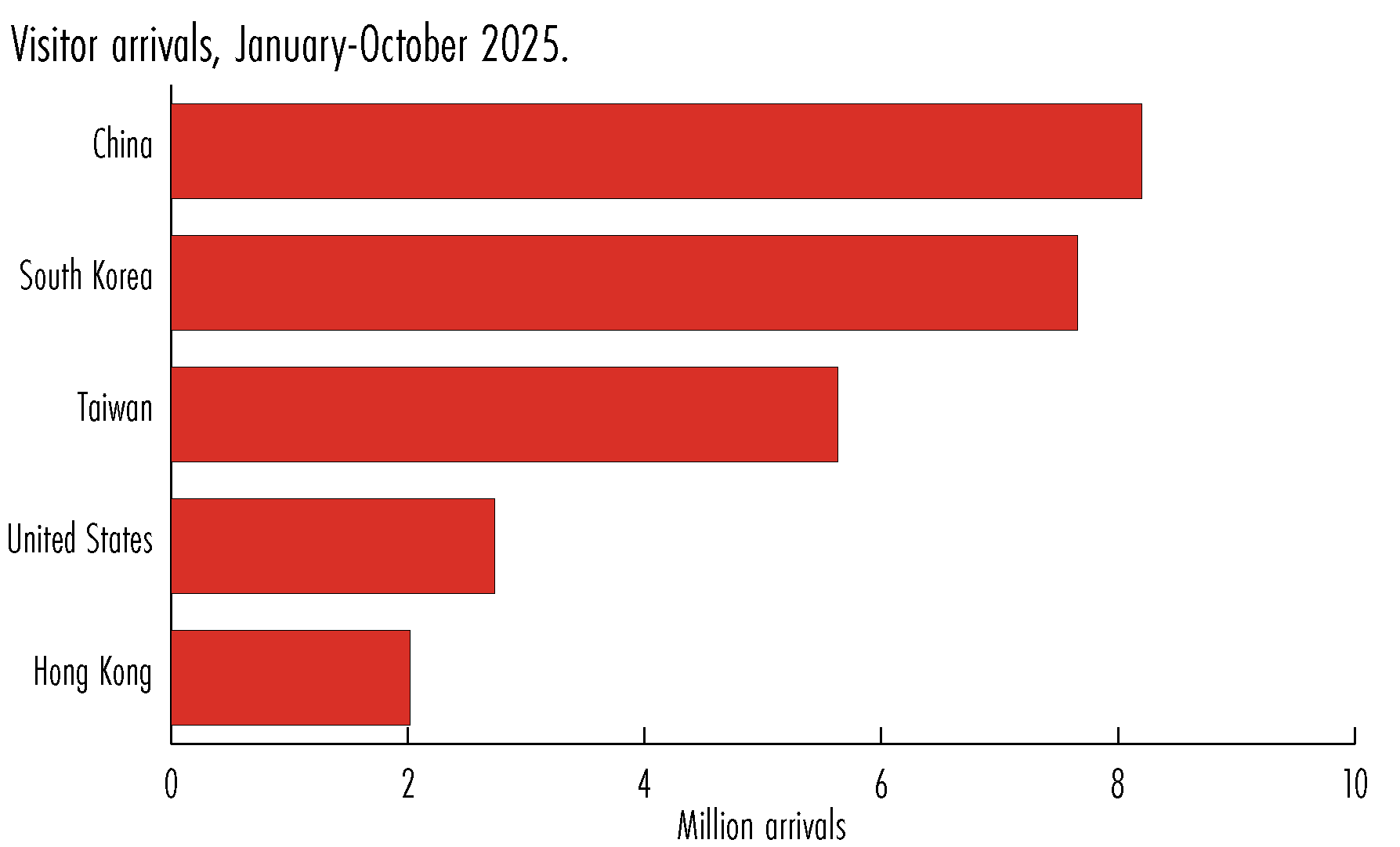
This year, China surpassed South Korea as the largest source of visitors to Japan. Tourists from China made up 27.7 percent of spending by inbound visitors between July and September, a greater share than any other country, according to the Japan Tourism Agency.
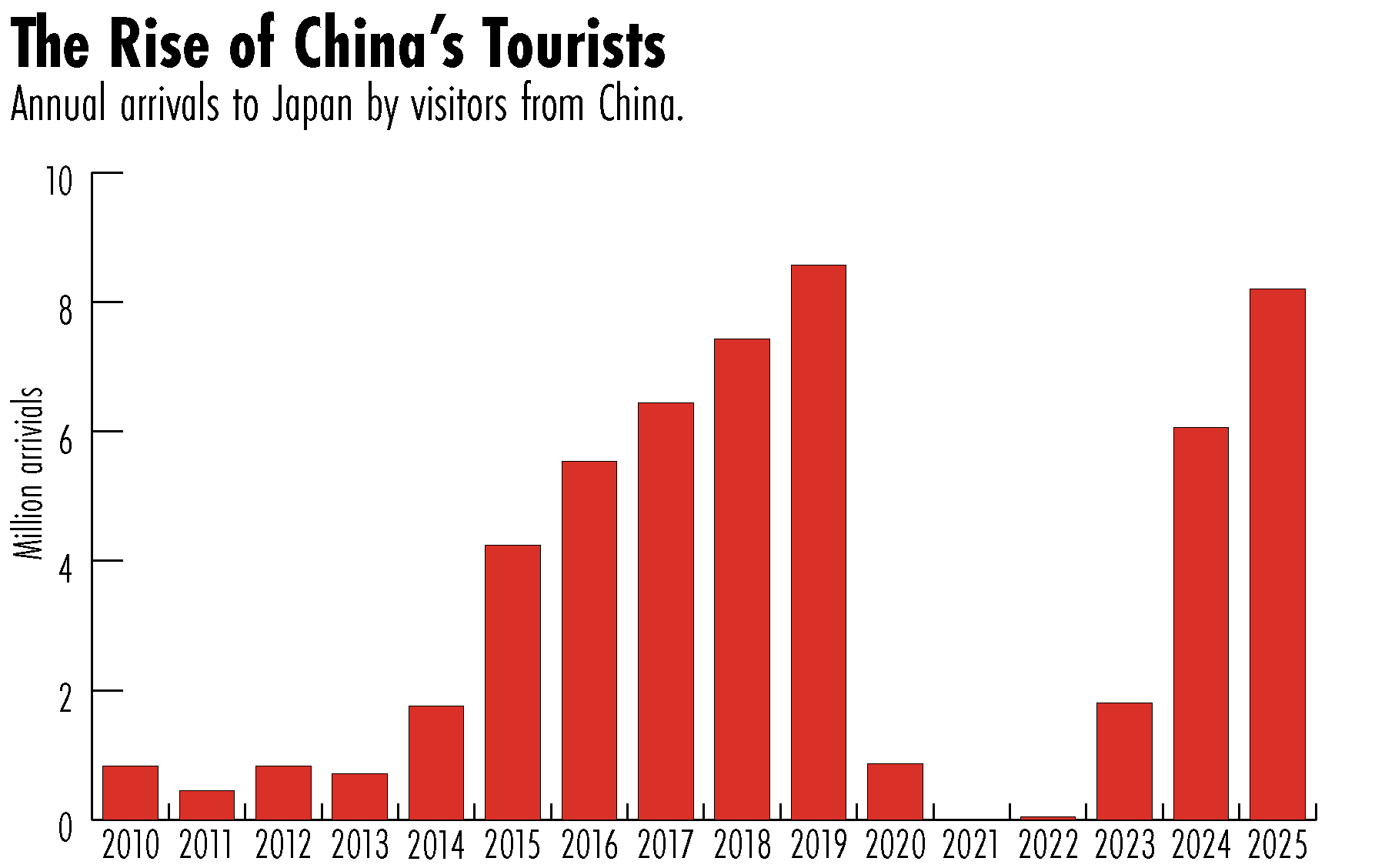
Takahide Kiuchi, chief economist at the Tokyo-based Nomura Research Institute, estimated this week that a 25 percent drop in visitors from China could cost Japan’s economy $9.6 billion.

The impact on the tourism industry may fall harder on Chinese-owned businesses, says Masutami Kawaguchi, a private tour operator in Kyoto. “Many group tours from China use tour buses operated by Chinese-owned companies, and individual travelers often use illegally operated, Chinese-run unlicensed taxis,” he says. “Popular rental kimono shops and some hotels are also run by Chinese operators, so much of their spending ultimately seems to flow back to China.”
A decline in tourism numbers could also have a silver lining. Japan’s popularity as a tourism hotspot has led many Japanese cities to suffer from overtourism, says Scott Gilman, co-founder of travel agency JapanQuest Journeys.
“In one sense it’s a negative when you pull back on the number of people coming from China,” he says. “In another it may have a direct impact on the overtourism issue.”

Noah Berman is a staff writer for The Wire based in New York. He previously wrote about economics and technology at the Council on Foreign Relations. His work has appeared in the Boston Globe and PBS News. He graduated from Georgetown University.