In Europe, Beijing is still seen as a competitor and partner — not a rival.
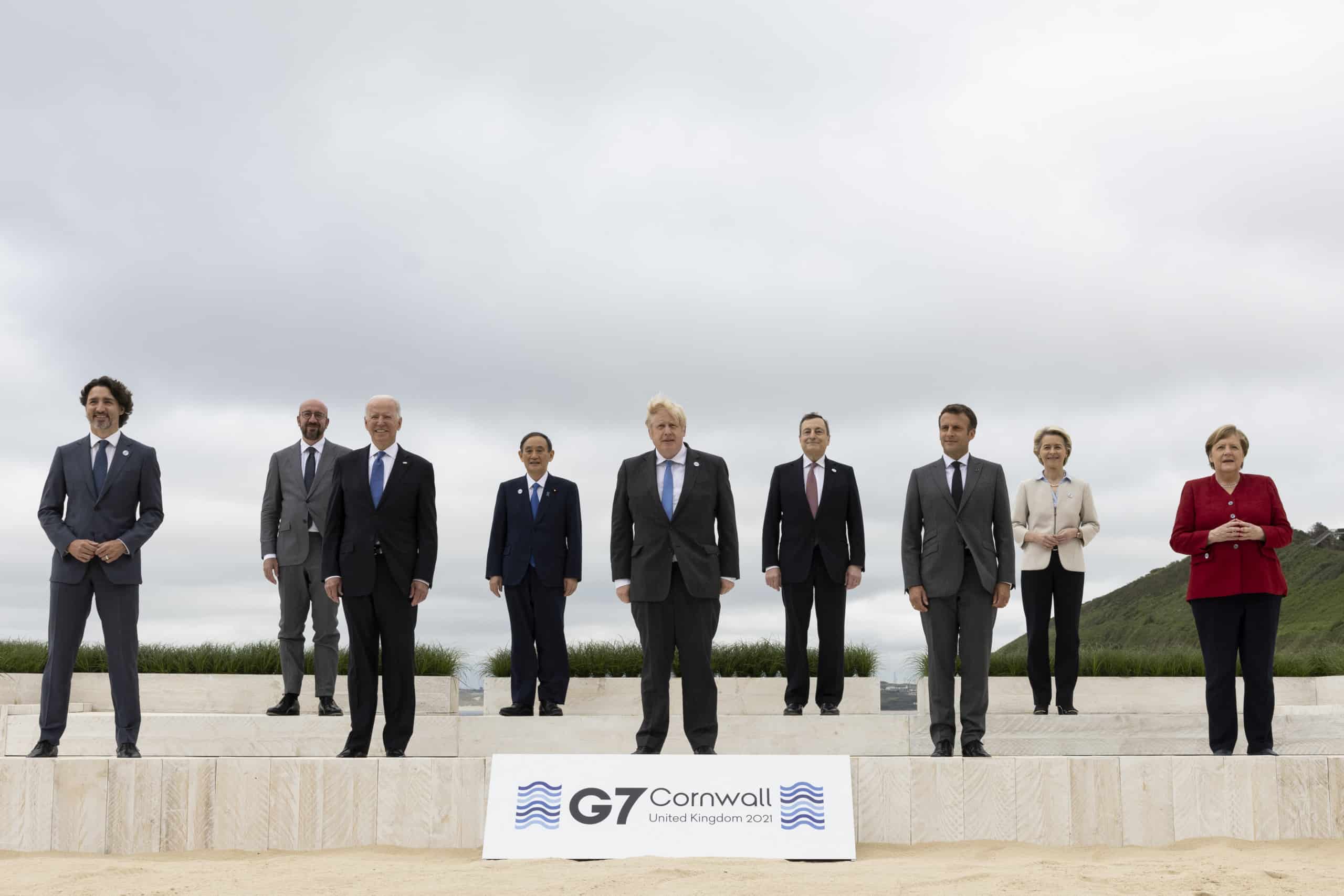
Leaders of the G7 in Cornwall, England, this past June. Credit: Simon Dawson/No. 10 Downing Street/Flickr
At the G7 summit of industrialized countries in June, the headline deliverable was an agreement to develop a shared approach to China. This was supposed to be operationalized through a new global development program, awkwardly dubbed “Build Back Better World” (B3W), to rival China’s “Belt and Road Initiative” (BRI).
But reports of Western unity are exaggerated, and the shows of unity strain credibility. There is no evidence that B3W is anything more than a slogan. German Chanc
Exclusive longform investigative journalism, Q&As, news and analysis, and data on Chinese business elites and corporations. We publish China scoops you won't find anywhere else.
A weekly curated reading list on China from Andrew Peaple.
A daily roundup of China finance, business and economics headlines.
We offer discounts for groups, institutions and students. Go to our Subscriptions page for details.
Not content to run the world’s second most powerful country for a decade, Xi Jinping set about changing everything everywhere all at once. In an excerpt from their new book, Steve Tsang and Olivia Cheung examine how Xi seized personal control of China’s foreign policy apparatuses.
The academic talks about whether China’s experience shows there can be such a thing as ‘good environmental authoritarianism’, and what the U.S. could learn from its approach to green policy.
Corporate Risk Intelligence for National Security, Compliance & Due Diligence
We use cookies to ensure that we give you the best experience on our website. If you continue to use this site we will assume that you are happy with it.